Nowadays, mountaineering is regarded as an adventurous sport, albeit one that can be an expensive business. It is difficult to imagine, then, that there was a time when mountains inspired not excitement but fear.
For centuries, mountains were regarded as forbidding places, inhabited in the popular imagination by devils, dragons, trolls and the spirits of the damned. They were difficult to cross, impossible to cultivate in many places and, to those who preferred their travels comfortable, best admired from a safe distance.
But attitudes began to change. As the Grand Tour of Europe became fashionable among wealthy travellers, the Alps attracted increasing numbers of visitors eager to explore their spectacular scenery. And where tourists went, an economy followed: hotels, transport, guides and porters all found new opportunities.
By the middle of the nineteenth century, mountaineering was entering its Golden Age. Climbers and their local guides were setting their sights on increasingly difficult summits. In 1857 the Alpine Club was founded in London to bring together those – mostly men – who shared this growing passion.[i]
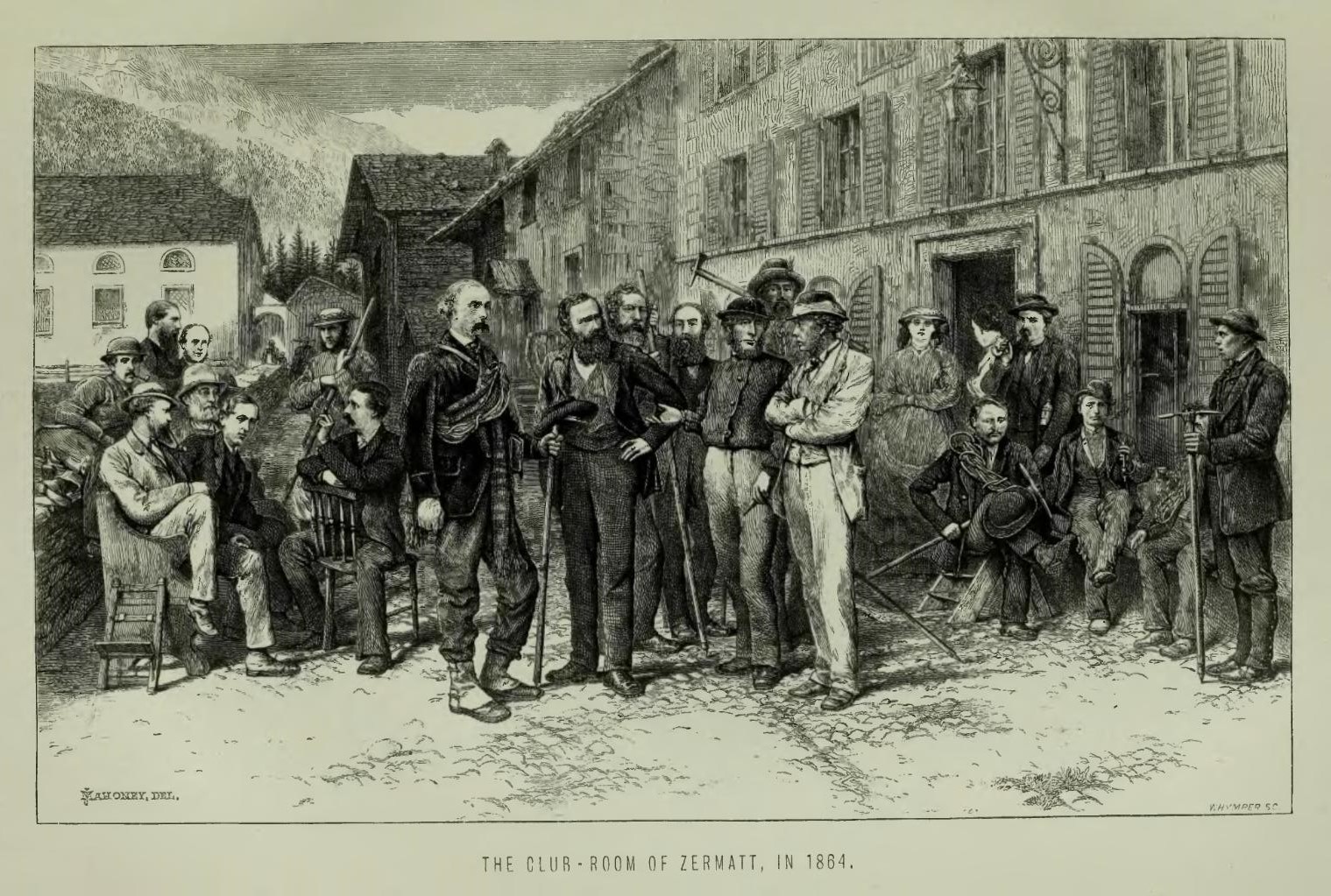
Then, in summer of 1865, came the disaster that threatened to tarnish the sport’s new-found glamour.
On 14 July, the 25-year-old British climber Edward Whymper led a party of seven on the first successful ascent of the Matterhorn. The achievement was extraordinary, but the triumph turned to tragedy on the descent. The inexperienced Douglas Hadow slipped, dragging three other men with him: local guide Michel Croz, the Reverend Charles Hudson and Lord Francis Douglas. The rope connecting them to the rest of the party snapped, and all four fell to their deaths.
The disaster caused an international sensation. The dangers of mountaineering were suddenly impossible to ignore, and the future of the sport looked uncertain.
Yet, for one young American boy, the tragedy had precisely the opposite effect. Rather than putting him off the mountains, it helped ignite a lifelong fascination with them. Years later, he would write:
It was the most dramatic event in a most dramatic year, and the cause of mountaineering seemed to be lost for ever, so deep and lasting was the impression made by this terrible event.[iii]
The lad in question was 15-year-old William Augustus Brevoort Coolidge, who had been brought to Europe the previous year with his younger sister Lil (who would become my great-grandmother) by their mother and her sister, Meta Brevoort.
Readers of my earlier post, A woman before her time, will already know something of Meta Brevoort, the remarkable woman who helped introduce her young nephew to the Alps. For those who haven’t met her yet, I’ll simply say that she was no ordinary aunt -and that the mountains were to become a passion they shared.
Less than a month after the Matterhorn tragedy, William found himself in Zermatt with Meta. Writing to his mother on engraved hotel notepaper featuring an image of the Matterhorn, he annotated the drawing and took care to explain that “the two dots you see on the picture represent where they [the victims] fell from and where they fell. A horrible distance.”[iv]
There was, however, nothing particularly obvious about William’s suitability for a life spent climbing mountains. His biographer paints a decidedly unpromising physical picture: “short, leaning to plumpness even in early years”[v] with a rare ability to pick up and nurture whatever disease happened to be in range. His eyesight was apparently so poor that the breaking of the binoculars through which he viewed the Alpine scenery could become a major disaster.[vi]
And yet, this unlikely individual would go on to make his mark on the history of Alpine climbing. So, what was it about young William that turned a teenager fascinated by a mountain tragedy into one of the most prolific figures in the history of the Alps?
For Christmas 1865, Meta gave her nephew a three-volume work published by the Alpine Club: Peaks, Passes, and Glaciers: A Series of Excursions by Members of the Alpine Club.[vii]
The gift seems to have helped set the direction of their shared ambitions. Together, aunt and nephew decided they wanted to become proficient mountaineers. Despite William’s youth and inexperience, they set out to tackle the ‘Haute Route’, a demanding 180km hiking and climbing journey through the Alps from Chamonix to Zermatt. Their plan involved bivouacking in chalets – spartan wooden huts that served as summer shelters for local shepherds.
The following summer, the unlikely pair set off on their first serious expedition, accompanied by three guides and two porters. The sun was shining when they left Chamonix, but the weather soon turned against them. Storms brought torrential rain, followed by blinding snow. By the time the party reached the first chalets, they found them shut and empty. It was another twenty-two hours before they finally reached an inn where they could take shelter and rest, their faces badly burned by the glare of the snow, against which they had no protection.[viii]
You might have expected this experience to put them off, but not a bit of it. They persevered and completed the Haute Route over the next couple of weeks without further incident.
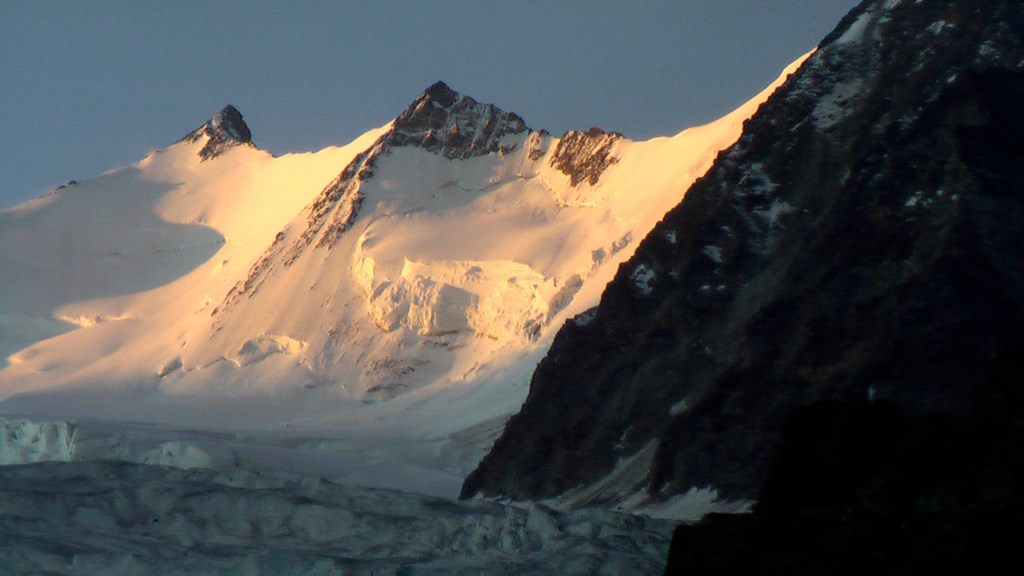
Meanwhile, William’s mother had decided that her son needed a proper education. Although she had never visited the Channel Islands, she chose to move the family to Guernsey, where William attended Elizabeth College for three years. He continued to develop his interest in Alpine literature and corresponded with several members of the Alpine Club.
During the summer holidays, however, he and Meta returned to the Alps, tackling increasingly ambitious routes. William was not quite sixteen when he achieved an extraordinary feat: three first ascents in less than a week – the Piz Badile (Cima di Tschingel), the Cima di Rosso and the Piz St Michel.
The third ascent very nearly ended in disaster. During the climb, one of the guides fell, dragging William down with him because they were roped together. The two tumbled and rolled for several seconds before – very fortunately – coming to a halt on the very brink of a precipice. Their clothes were torn and they were covered in cuts and bruises, but miraculously their injuries were not serious enough to prevent them from continuing the climb.
The Alpine weather presented another challenge that summer, although this time the danger came from the sun rather than the snow. William suffered terribly from sunburn. Meta wrote to her sister:
“His poor face is in a dreadful state especially the lips and side of the nose. We have never been so scarified as now. He looks no worse than I do, but I think he feels worse because he refused to use cream and cold cream which disgusts him but affords some relief.”[x]
Apparently, William was prepared to risk life and limb on precipitous mountain slopes but drew the line at putting cream on his face. I suspect that his aunt had rather more patience than he deserved.
Back in Guernsey that autumn, William wrote an account of his expeditions and submitted it to the Alpine Journal. It was published in the May 1868 edition – a remarkable achievement for someone who was still in his teens.
Tschingel
In 1868, William, Meta, their regular guide Christian Almer and one of Almer’s sons set out to climb the Eiger. The mountain had first been conquered ten years earlier, in 1858, when the Irish climber Charles Barrington reached the summit by a route led by Almer and Peter Bohren. William and Meta were attempting the same route, but the mountain had other ideas.
At a certain point, the rocks, instead of being warm and dry, were covered in verglas, a treacherous coating of black ice, that made further progress impossible. For William, who was already becoming an increasingly ambitious climber, the disappointment was heartbreaking.
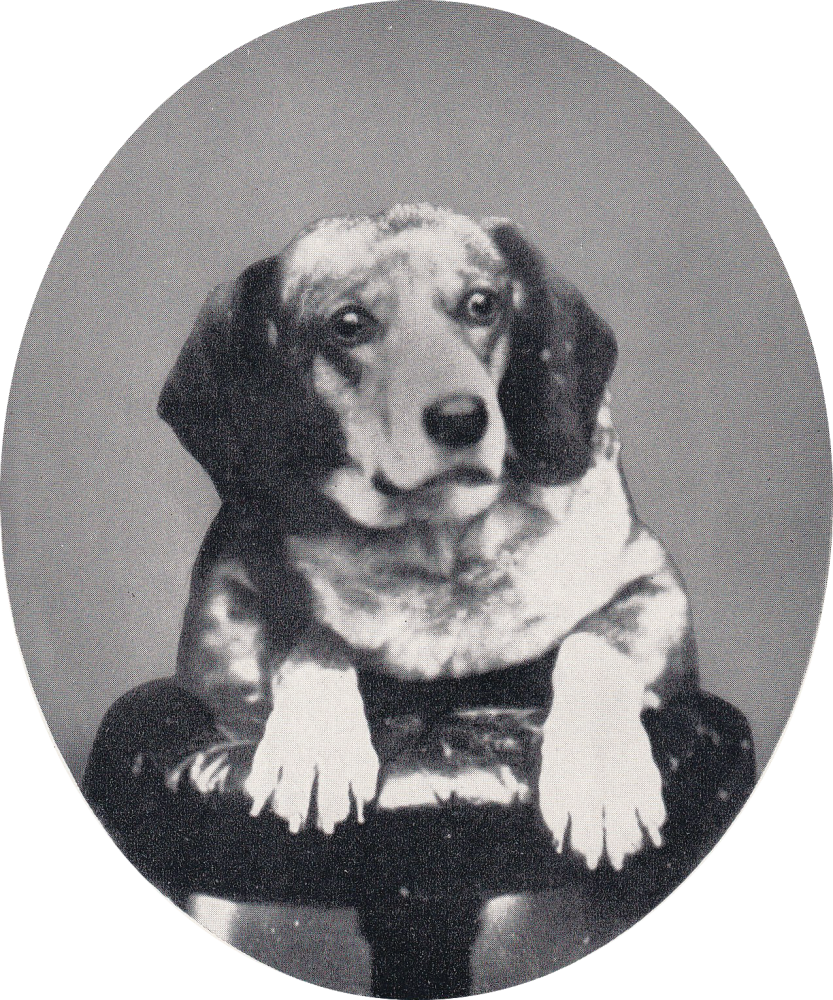
Almer evidently decided that the best consolation for such a crestfallen young mountaineer was a dog. He gave William a little brown-and-white creature named Tschingel, and the rest, as they say, is Alpine history.
Looking like a cross between a bull terrier, a small bloodhound and a large beagle, she had already given birth to more than thirty puppies in the previous three years. Meta, incidentally, would always refer to Tschingel as “he”, despite the dog’s decidedly female credentials.
Tschingel was no novice when it came to mountaineering. On 17 July, she joined William and Meta on their ascent of the Blümlisalphorn. Before long, the three had become famous throughout the Alpine world as “the young American who climbs with his aunt and his dog”.[xi]
Tschingel went on to accompany them on several more major ascents. Sometimes she was roped to the rest of the party by means of a ring attached to her collar. Eventually, she acquired a special collar decorated with silver tags engraved with the names of all the peaks she had climbed.
I remember that collar when it hung in my grandmother’s house when I was a child. Sadly, it was lost after her death in the early 1970s, along with an album of photographs of the mountaineering trio.
By the end of her climbing career, Tschingel had completed sixty-six grandes courses -major expeditions, eleven first ascents and around one hundred minor expeditions. In 1875, she was elected an Honorary Member of the Alpine Club – the first female ever admitted to that exclusive body.
Oxford
In 1869, William left Elizabeth College and Guernsey, and the family moved to Oxford where he took up a place at Exeter College.[xiii]
In November that same year, nineteen-year-old William received the considerable honour of an invitation to join the prestigious Alpine Club. It was a rare distinction for someone so young. Before his membership could be confirmed, however, he was asked to submit a list of his climbing expeditions. William offered to provide a “complete” account, but the offer was politely declined. Such an undertaking, he was told, would involve too much work and risked introducing “almost inevitable errors”.
This was an interesting response to a young man who would later become renowned for his meticulousness, sometimes to the point of obsession. William was particularly sensitive to any suggestion that his work contained errors, and such criticism could provoke considerable anger. We don’t know how he took the Alpine Club’s response at the time; he appears to have let the matter drop, and his membership was duly accepted.
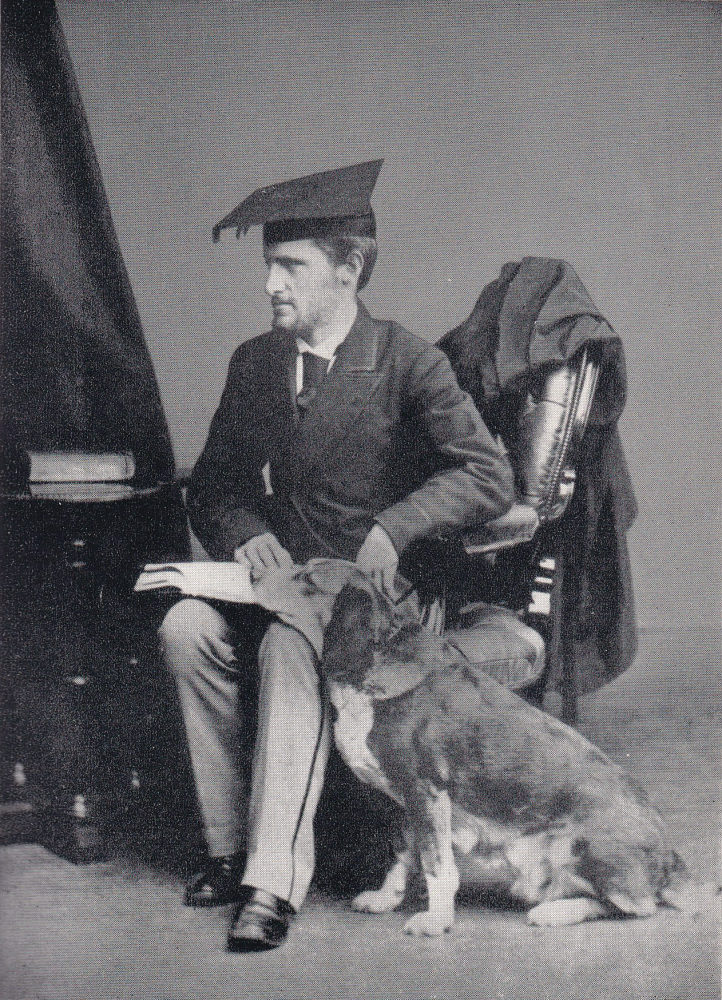
Oxford did not put an end to William’s mountaineering. During the following years, he, Meta and Tschingel regularly returned to the Alps, usually accompanied by their guide Christian Almer and often by his son Ulrich. They undertook a series of major first ascents, conquering peaks that had previously resisted other climbers. But summer expeditions were no longer enough. William and Meta were ready to try something that, in the 1870s, was still widely regarded as distinctly eccentric.
Winter mountaineering was described as “an eccentricity which was definitely useless, probably dangerous, against the interest of the native Swiss who wished to rest and recuperate during the winter months”.[xv] Christian Almer persuaded them to abandon their plans for winter climbs around Chamonix and instead concentrate on the Bernese Oberland. By the middle of January 1874, they had settled near the Almer family’s home in Grindelwald.
Winter climbing brought its own challenges. The mountain huts used during the summer were often unusable, buried beneath snow, so William, Meta and Christian Almer pioneered the use of “high bivouacs”: pitching a tent on the snow at altitude rather than relying on a hut. Almer, the experienced guide who had helped William and Meta realise their increasingly ambitious plans, was instrumental in these experiments. Their achievements went beyond winter climbing, however. William was also undertaking the painstaking, systematic exploration of Alpine regions that would become another defining feature of his mountaineering career.
Tragically, William’s partnership with his aunt Meta ended abruptly in December 1876, when she died suddenly of rheumatic fever, aged just 51. She had been his aunt, companion and climbing partner, and had helped nurture the passion that shaped so much of his life.
Three years later, Tschingel died in her sleep beside the kitchen fire. She was old; her brown coat had turned white, and she had lost her sight and her teeth. William never forgot his faithful climbing companion, and for the rest of his life he kept her collar, with its silver tags engraved with the names of the peaks she had climbed, hanging on a hook in his home.[xvi]
William’s life in Oxford continued alongside his mountaineering. He became a Fellow of Magdalen College in 1875 and, five years later, was appointed Professor of Modern History there. He was ordained as an Anglican priest in 1883 and served an Oxford congregation for nearly twelve years. He also found time to edit the Alpine Journal from 1880 to 1889, earning praise from the Club’s president for his extraordinary accuracy and thoroughness when he stepped down.[xvii] These qualities would later make him a formidable figure in Alpine circles, where his insistence on precise details could sometimes provoke as much controversy as admiration.
Alongside his academic and religious responsibilities, William continued his systematic exploration of the Swiss, French and Italian Alps.
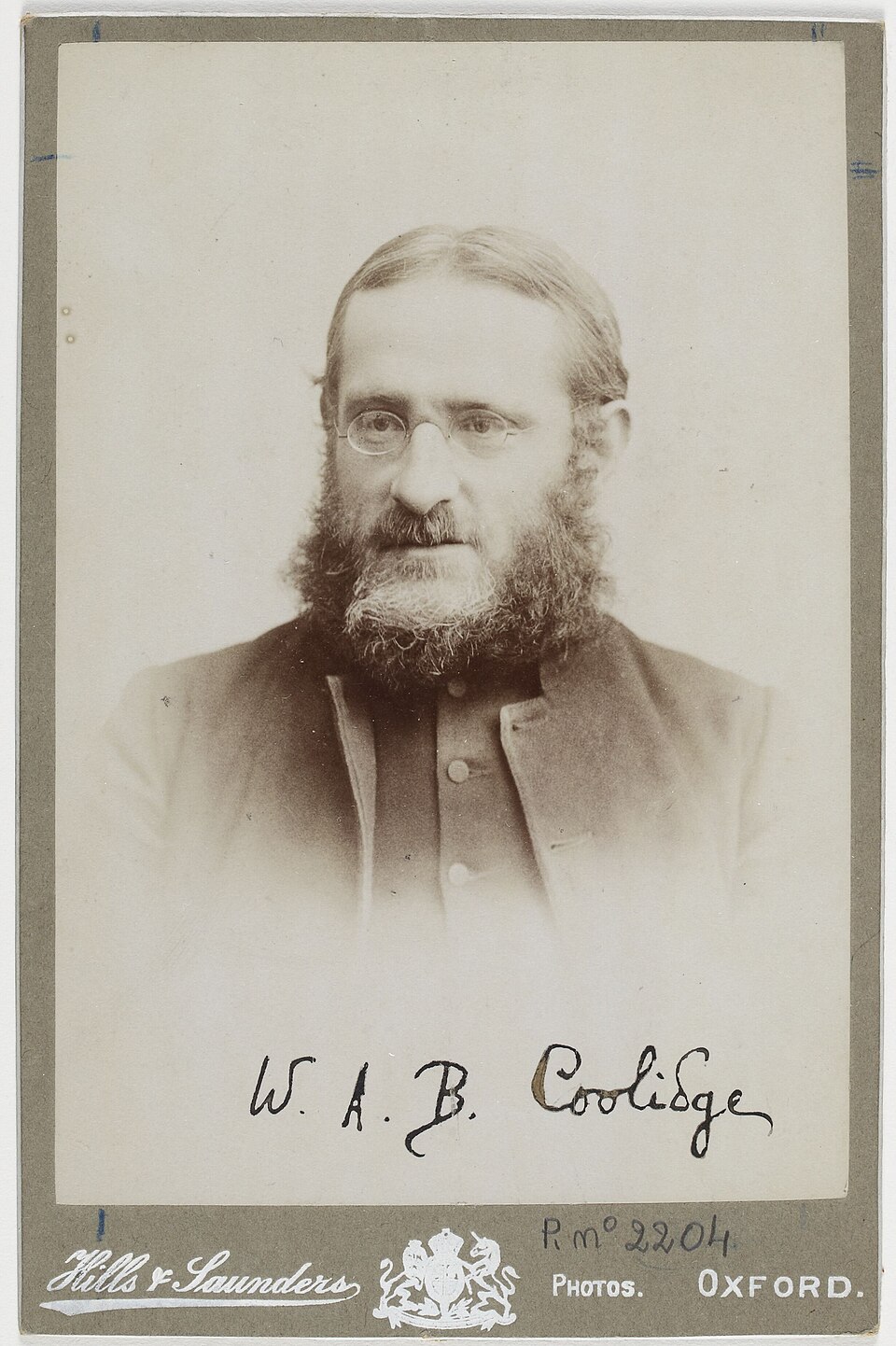
The Sage of Grindenwald
In March 1896, William having realised his health was suffering in the damp British winter climate left Oxford for good and settled in Grindelwald, where his home, Chalet Montana, looked out across the valley towards the as-yet-unconquered North Face of the Eiger.
William never returned to the United States. When war broke out in 1914, he applied for a British passport, having lost his entitlement to US citizenship. His application was refused because he had left Britain nearly twenty years earlier and no longer met the residence requirements. William argued that he had sworn allegiance to Queen Victoria when he became a Fellow of Magdalen College and again when he took Holy Orders. Nevertheless, his application was unsuccessful, and he came to take pride in describing himself as “the man without a country” and “the first displaced person”.[xix]
Over the course of fifty years, William had amassed an extraordinary library of some sixteen thousand books, particularly on Alpine and Swiss history. They filled twelve rooms of his home.
Although he tended to be reserved with strangers, he was an attentive, welcoming host at home, delighting visitors with memories of his adventures in the remote Alps. [xx]
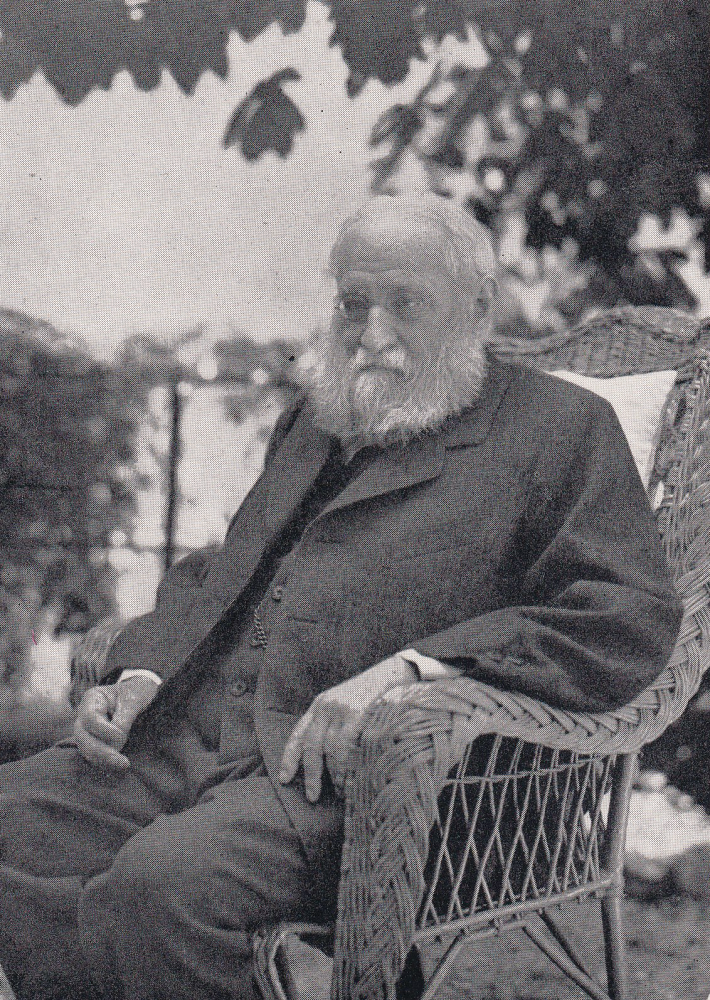
As the years wore on, William’s physical health deteriorated. He suffered from gout and rheumatism, and his weight increased, but there is no evidence that his mental faculties declined. Early in 1925, his niece and nephew (later my grandfather) visited him. By then, he was almost housebound but had apparently been delighted to have recently enjoyed his first-ever ride in a motor car.[xxi]
William died at Chalet Montana on 8 May 1926 and was buried outside the church in Grindelwald, in the shadow of the Wetterhorn. His gravestone recorded that he had died aged seventy-six and that, “at his own request he was buried among the mountains he loved so well”. Ironically, a man with an almost obsessive attention to detail had been commemorated with two errors: he was only seventy-five, and the stonemason had spelt “mountains” without its “u”.
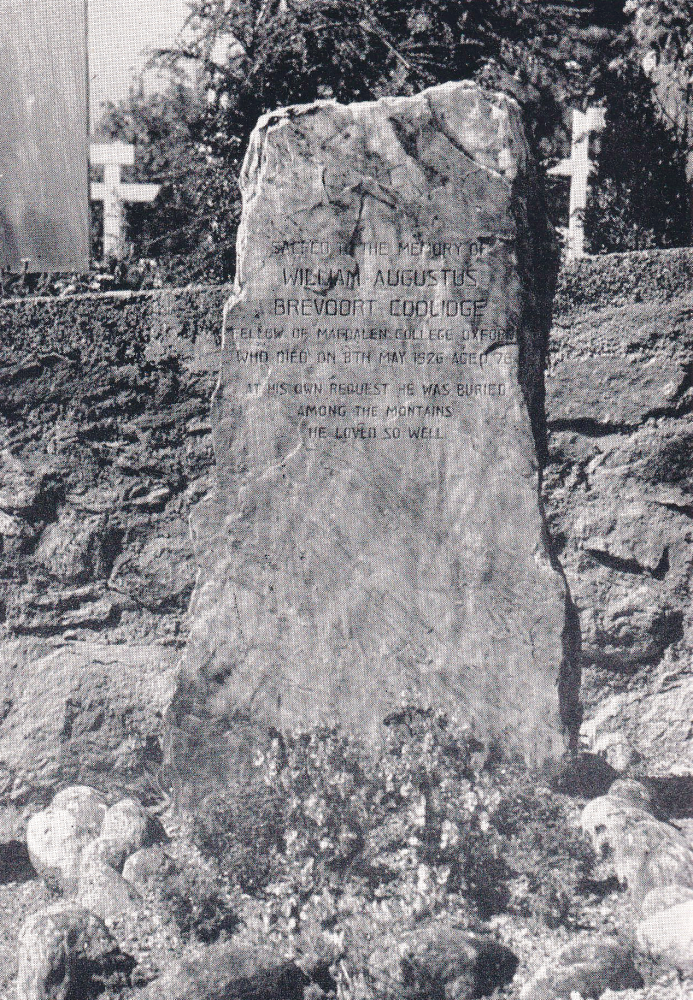
During his climbing career, William was credited with around 1,750 ascents, including 74 first ascents. He was also a formidable scholar, fluent in English, French and German, and an authority on the history, geography and exploration of the Alps. His books included The Alps in Nature and History (1908) and Alpine Studies (1912), while his contributions to Alpine scholarship earned him honorary membership of the English, French and Italian Alpine Clubs. Three places in the Alps also bear his name: Pic Coolidge (12,520 ft), Cime Coolidge (11,925 ft) and Coletto Coolidge (10,730 ft), a pass in the Italian Alps that he was the first to cross.
Back to Grindenwald
I visited Grindelwald in 2024 and could easily imagine William sitting on his balcony enjoying a morning coffee, gazing across the valley at the North Face of the Eiger with a certain satisfaction. This was the great “last problem” of the Alps, regarded as one of the most challenging and dangerous unclimbed faces in mountaineering. It was not conquered until 1938, twelve years after William’s death.
We found the church where he was buried, right in the centre of the village, opposite our hotel. The original church had been destroyed by fire and subsequently rebuilt. Outside was a beautiful cemetery, but most of the graves were relatively recent, and we couldn’t find William’s. With no family to maintain it, his grave may have been lost over the years.
William never lived to see the Eiger’s North Face conquered, but he had spent a lifetime exploring the Alps and helping to shape the history of mountaineering. And, as he had requested, he was buried among the mountains he loved.
Although we didn’t find William’s grave, I brought home a small snowstorm globe of Grindelwald church, complete with a backdrop of mountains, chalets and an alpine meadow. It’s a decidedly tacky souvenir, but it still makes me smile. I doubt William would have approved, but I hope he would have understood the sentiment behind it.
[i] British Mountaineers by FS Smythe published in London by Collins in 1946
[ii] Image in the public domain via Wikimedia Commons accessed 23 Oct 2026
[iii] The Alps in Nature and History by WAB Coolidge published in London by Methuen in 1908
[iv] The Victorian Mountaineers by Ronald Clark published in London by BT Batsford in 1953
[v] Ibid
[vi] Ibid
[vii] An Eccentric in the Alps by Ronald W Clark published in London by Museum Press in 1959
[viii] Ibid
[ix] dawn above the Grat viewpoint, 2300m (CC BY 2.0) by Rick McCharles via flickr.com accessed 28 Oct 2026
[x] An Eccentric in the Alps by Ronald W Clark published by Museum Press in 1959
[xi] Ibid
[xii] Ibid
[xiii] Elizabeth College Register 1824-1873 published in Guernsey by Frederick Clarke in 1898
[xiv] An Eccentric in the Alps by Ronald W Clark published by Museum Press in 1959
[xv] Ibid
[xvi] Ibid
[xvii]The Alpine Journal and Its Editors via https://www.alpinejournal.org.uk/Contents/Contents_1974_files/AJ%201974%20166-173%20Blakeney%20Journal.pdf accessed 29 Oct 2026
[xviii] W.A.B. Coolidge / Hills & Saunders via Wikimedia Commons photographs in the public domain accessed 29 Oct 2026
[xix] The Victorian Mountaineers by Ronald Clark published in London by BT Batsford in 1953
[xx] WAB Coolidge Obituary in the Alpine Journal 1926 via https://www.alpinejournal.org.uk/Contents/Contents_1926_files/AJ%201926%20Vol%2038%20278-304%20In%20Memoriam.pdf accessed 29 Oct 2026
[xxi] An Eccentric in the Alps by Ronald W Clark published by Museum Press in 1959
[xxii] Ibid
[xxiii] Ibid
