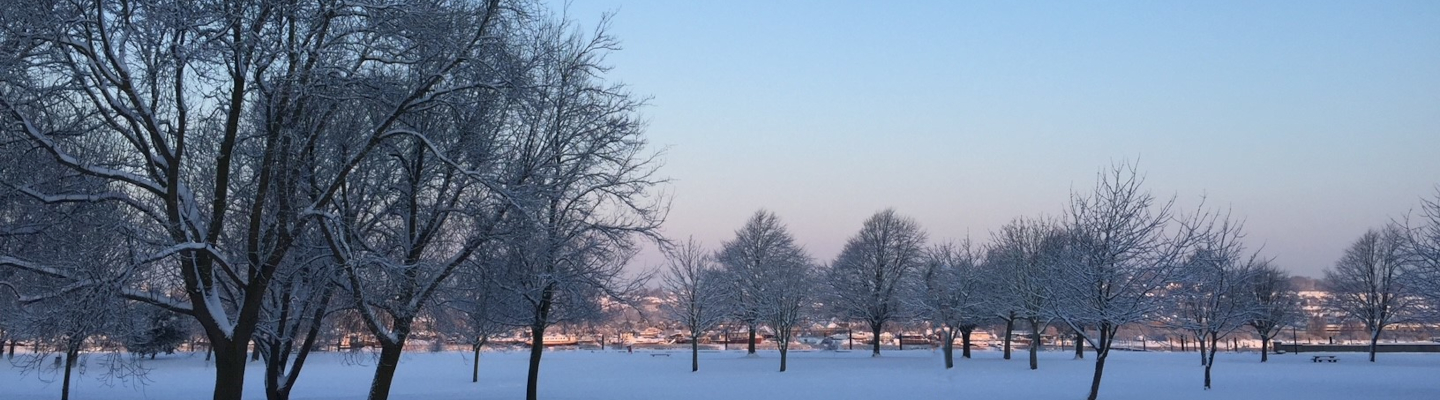
Early life in Norfolk
My fourth great-grandfather Michael Mayhew was baptised at St Mary’s Parish Church, Denton, Norfolk, on 19 October 1777, the son of Isaac Mayhew and his wife Mary (née Smith).[i]
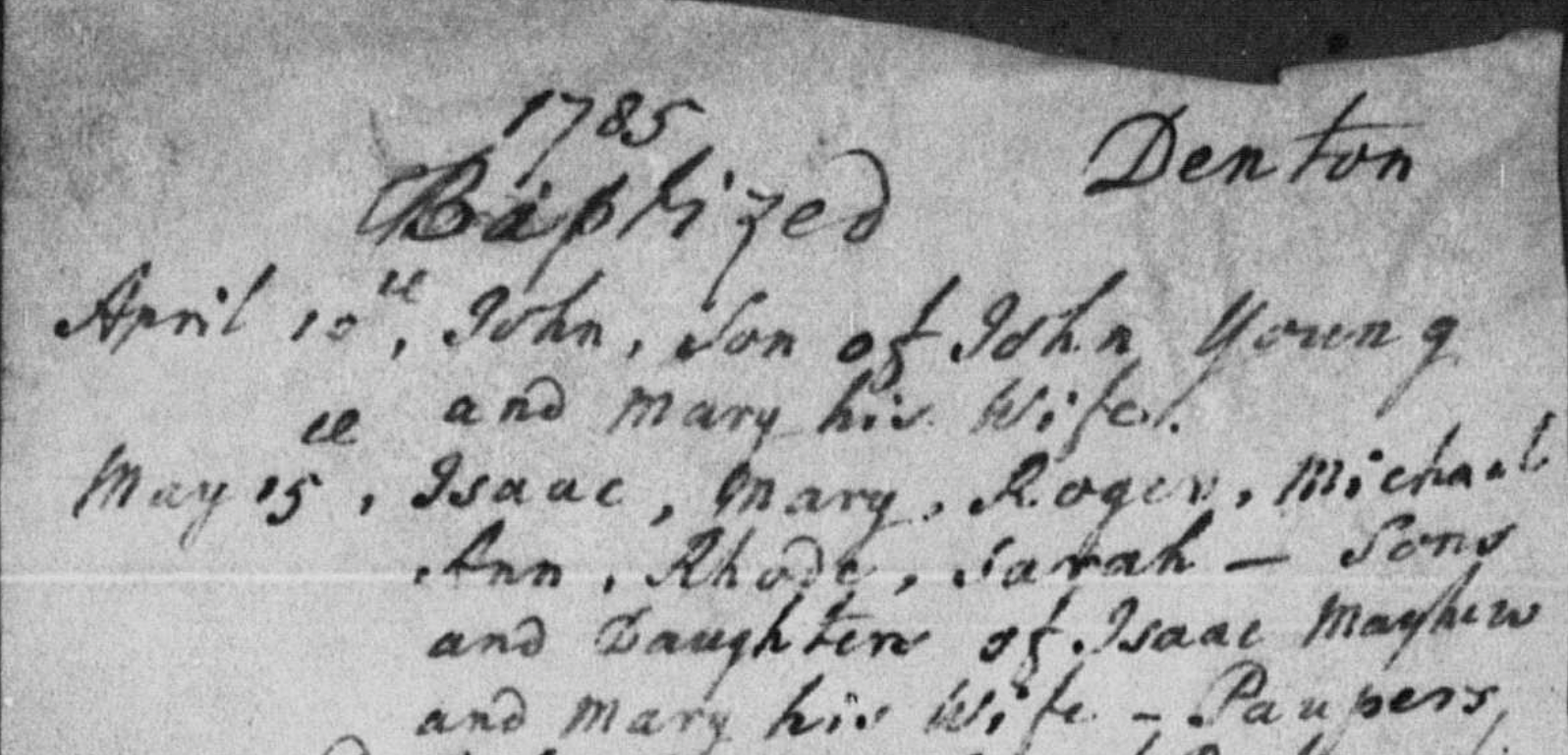
An unusual entry appears in the Denton parish register in May 1785. It lists Michael and six of his siblings – Isaac, Mary, Roger, Ann, Rhode and Sarah – together as the children of Isaac and Mary Mayhew, adding the description ‘Paupers’. All seven had already been baptised individually, so the entry may have been an administrative record connected with the family’s poverty, but its precise purpose remains a mystery.[ii]
Four more children were born to Isaac and Mary by 1793: Catharine, Susan and twins Jemima and Diana. They too were baptised at Denton.
Childhood, work and parish support
Michael and his siblings grew up in a world where childhood could be very different from today. Child labour was commonplace, particularly in agricultural communities, and there was no national requirement for children to attend school. Charity and Sunday schools offered some opportunities for education, but we have no evidence that Michael received any formal schooling. For children whose families struggled to support them, work could begin at a very young age.
Under the Old Poor Law, parish churchwardens and overseers could arrange for children from poor families to be bound as parish apprentices, with the consent of two justices of the peace. Some were apprenticed at only seven or eight years old and could remain in service until they reached the age of twenty-one. Boys might be placed with farmers or other employers to learn ‘husbandry’, while girls were more commonly sent into domestic service to learn ‘housewifery’. Unlike ordinary employment, parish apprenticeships were generally unpaid: children usually received food, clothing and a place to sleep, together with whatever basic instruction their master or mistress provided, rather than wages. These arrangements were intended, in part, to provide for children who might otherwise become a burden on the parish, but they could also take them away from their families, sometimes to live and work in another parish.
There is no concrete evidence that Michael or any of his siblings were ever bound as parish apprentices, so we cannot know for certain whether they experienced this disruption to family life. Their parents, however, remained associated with Denton: his mother Mary was buried there in October 1799[iii] and his father Isaac in May 1813.[iv]
Following their father’s death, two of Michael’s younger sisters, Jemima and Catharine, underwent Poor Law examinations to establish their legal settlement. Catharine stated that she had been born at Denton and understood that her parents’ legal settlement was there, ‘as she hath heard and believes’.[v]
Marriage and family in Suffolk
By the summer of 1799, Michael, aged twenty-one, was living in Chillesford, about thirty miles from Denton. How he came to be there is not yet known, but it is possible that he had left Norfolk as a young man to take up employment or enter service in Suffolk.
On 16 July 1799, Michael married Elizabeth Barrett at Tunstall. The banns had been called in both Tunstall and Chillesford on 16 and 23 June and 14 July,[vi] and the marriage register describes Michael as being of Chillesford. Both bride and groom made their marks in the register. Their witnesses were William Pratt, who also made his mark, and James Sawyer, who signed his name.[vii]
Their first child, a daughter named Mary, arrived just six days later, on 22 July 1799. She was baptised privately the following day.[viii]
Michael and Elizabeth had twelve known children. The first five were baptised at Tunstall between 1799 and 1807, followed by six at Rendlesham between 1809 and 1818, and their youngest, John, at Wickham Market in 1821. Several of their children’s names appear to reflect family connections. Mary and Isaac were the names of Michael’s parents, while Michael and Elizabeth were presumably named after their own parents. Sarah and Susan were the names of two of Michael’s sisters, and William was the name of Elizabeth’s father. The remaining children were Eliza, Henry (my third great-grandfather) and his twin sister Priscilla, and Charlotte. I have previously written about Henry, Priscilla and Charlotte on this blog.
Gamekeeping at Rendlesham
Apart from the parish registers, little has so far come to light about the family’s time in Tunstall. By 1809, however, they were at Rendlesham, about two miles from Tunstall, and the baptisms of their children in 1814, 1816 and 1818 specifically describe Michael’s occupation as a gamekeeper.
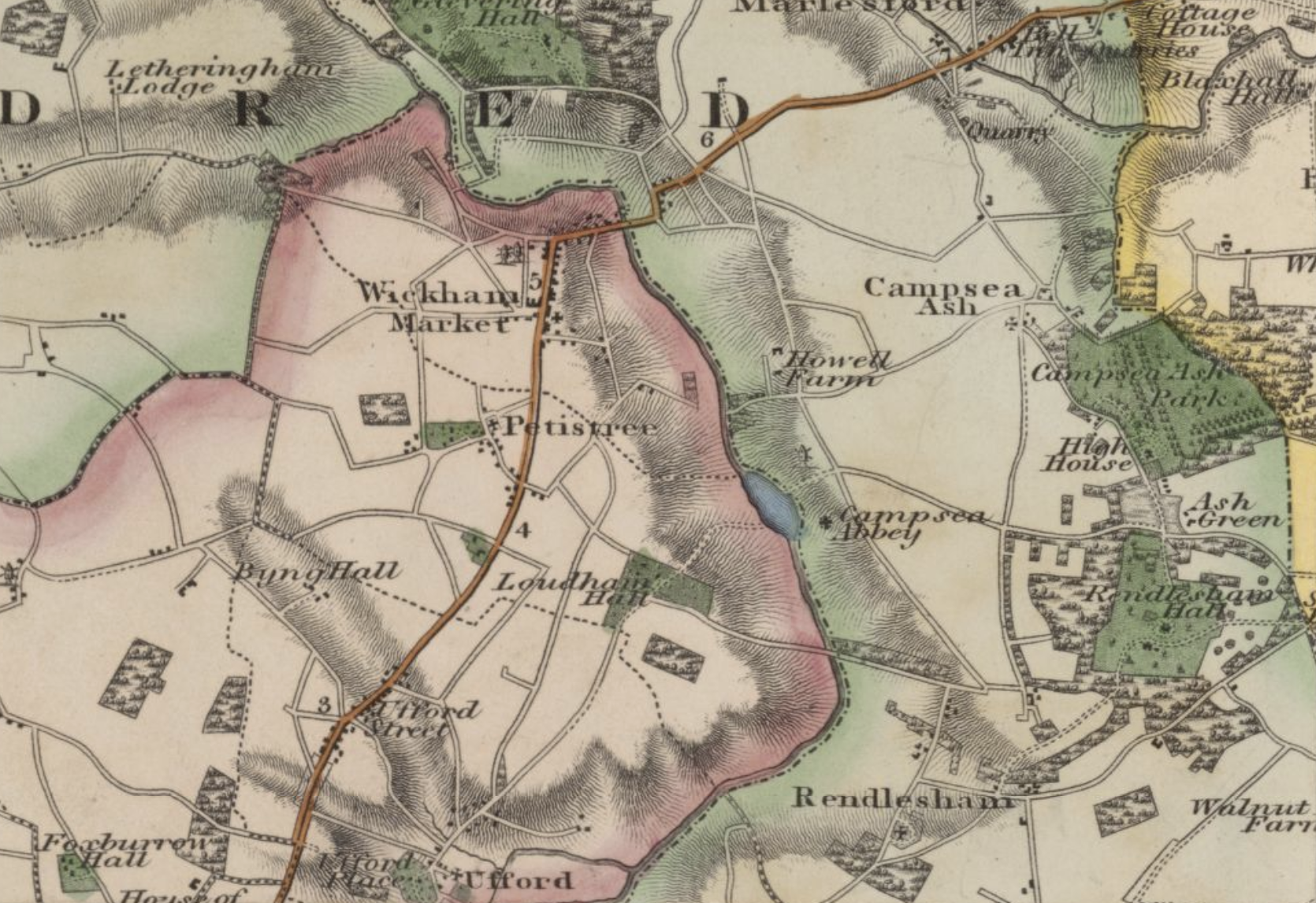
An old map of the area helps us picture the setting in which Michael may have worked. Rendlesham was dominated by the extensive estate of the Thellusson family, whose principal residence was Rendlesham Hall. The estate was particularly noted for its shooting, attracting distinguished visitors and providing employment for those involved in managing its grounds and game. Although we cannot establish whether Michael was employed directly by the estate, its size and sporting activities would have provided a natural setting for his occupation.
Landowners employed gamekeepers to breed and protect game for shooting, manage habitats, control predators and enforce game laws. On large estates, keepers might be provided with a cottage and were responsible for maintaining sufficient stocks of game for the landowner’s shooting parties and, sometimes, for the estate workers.
Although gamekeepers held considerable authority, enforcing unpopular game laws could bring them into conflict with local communities. They might search cottages for snares, nets and illegally taken game, and bring suspected poachers before a local justice of the peace. Poaching was widespread in rural areas, driven by a mixture of poverty, the need for food and the value of game as something that could be sold.
Landowners employed gamekeepers to breed and protect game for hunting, manage habitats, control predators and enforce game laws. On large estates, the keepers usually received a cottage and maintained sufficient game for the landowner and estate workers.
Although gamekeepers held considerable authority, enforcing unpopular game laws could strain relationships with local communities. They searched labourers’ cottages for snares, nets and illegally taken game, and brought suspected poachers before a local justice of the peace for summary trial and punishment. Poaching was widespread as hungry rural workers sought extra food for their families.
Pay was generally little better than that of an agricultural labourer, but the benefits could include accommodation, fuel, clothing and transport. Keepers might also earn extra money from selling rabbits, moleskins, fox furs and birds’ feathers, and receive additional payments for killing vermin – sometimes known as ‘head money’.
The extensive Thellusson estate dominated the area when the parish registers recorded Michael as a gamekeeper. Renowned for its shooting, Rendlesham attracted distinguished visitors. Its game books recorded shooting parties and their bags of pheasants, partridges and hares, sometimes in extraordinary numbers. A December 1890 article in The Field drew on these records to describe sporting life on the estate. Entries for 1818 recount shooting mishaps, unusual shots and even a gun that repeatedly failed to fire because of faulty powder.[x]
In July 1818, Lord Rendlesham relinquished the Hall, which was leased to Mr Orby Hunter for £700 a year. Shooting continued under the new tenant, and Hunter himself appears among the shooters in the 1819 game book.
A new start in Wickham Market
Michael and his family appear to have left Rendlesham before 4 November 1821, moving to Wickham Market, about two and a half miles to the north. Their youngest son John’s baptism in Rendlesham on that day records the family as living in Wickham Market and describes Michael’s occupation as a labourer.[xi] His earlier work as a gamekeeper had evidently come to an end, although we do not know whether his departure was connected with the change of tenancy at Rendlesham Hall.
Wickham Market was then a small village near the River Deben. With around a thousand inhabitants, it had five public houses, local shops and tradesmen, and an economy largely supported by agriculture and travellers passing through on the route between Yarmouth and Ipswich.[xii] There was little manufacturing industry, but several local carriers provided transport links with neighbouring towns and villages.
Having previously worked as a gamekeeper, Michael may have found it difficult to secure similar employment, and the parish register’s description of him as a labourer suggests that he had moved into more general work.
Working as a carrier
By 1830, Michael had established himself as a carrier.[xiii] Pigot’s Directory records services from Wickham Market to Woodbridge and Ipswich.[xiv]
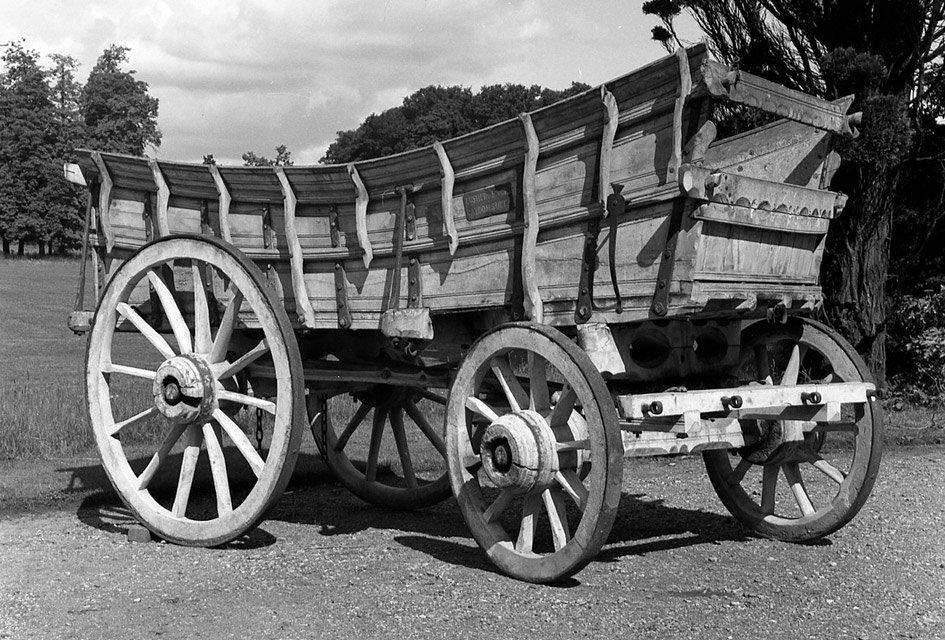
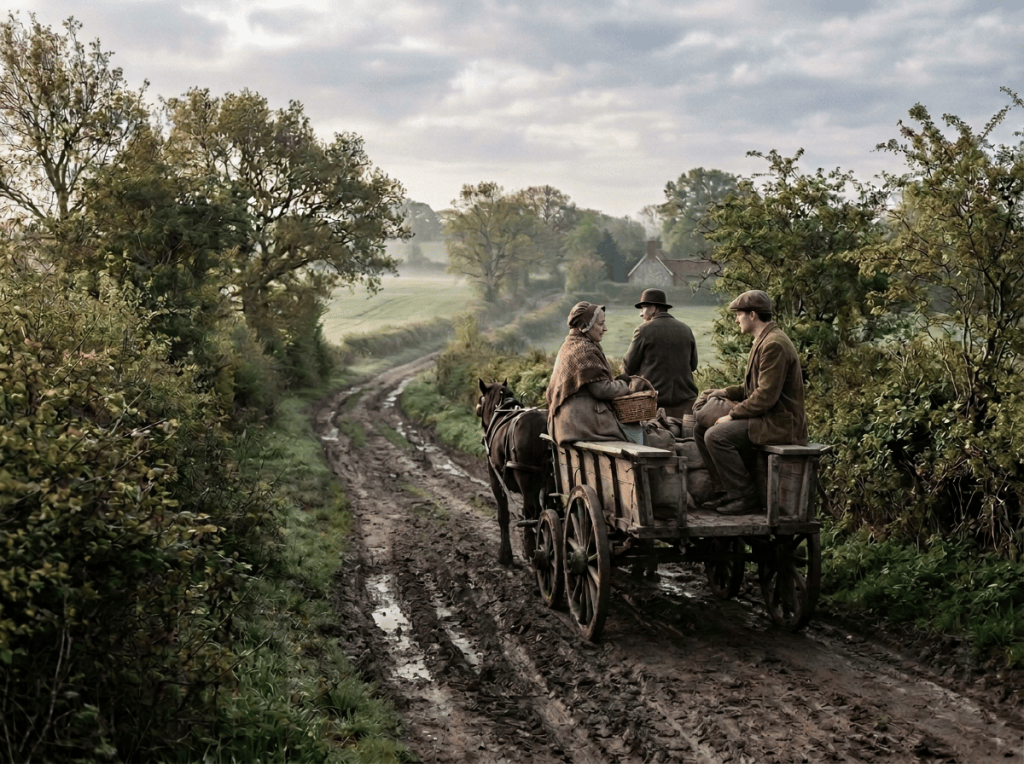
Carriers played an important part in rural life, providing passenger transport and moving goods between villages and market towns. They carried people travelling on business or visiting neighbouring communities, took local produce to market, and brought back purchases and supplies. Their vehicles were generally sturdy, box-like carts, sometimes drawn by several horses, which carrying passengers alongside parcels and other goods.
The directory gives a glimpse of his regular routes:
- Woodbridge, daily: Michael departed from his home in Wickham Market and waited at the Lion public house in Woodbridge each afternoon for the return journey. The market town lay about five miles away on the River Deben.
- Ipswich, Saturdays: He travelled approximately twelve miles to Ipswich, waiting at the Portobello Inn in Upper Orwell Street for the return journey. This Saturday service to Ipswich extended his business beyond his immediate neighbourhood.
Journeys were slow and uncomfortable, at around three to four miles an hour. Many carriers’ carts had no springs to cushion the jolts of rough country roads. Passengers boarded via rear steps and sat on unpadded wooden benches along the sides, with goods and sometimes baskets of live animals on the floor between them. In open carts, passengers and their belongings were exposed to the Suffolk weather.
Michael’s carrier business evidently continued for several years. White’s Suffolk Directory of 1844 still lists him operating a daily service between Wickham Market and Woodbridge from his home. [xvi] His regular route had therefore become an established part of local transport.
Home and household on Upper Street
A advertisement in the Ipswich Journal on 5 October 1839 describes a plastered and thatched cottage on Upper Street, Wickham Market, offered for sale as a freehold. It included a stable, other buildings and nearly an acre of garden ground. Michael Mayhew and Jonathan Manning were named as occupiers, paying combined annual rents of £15 10s. However, the advertisement does not explain how the two tenants shared the premises.[xvii] A year later, the 1840 Tithe Apportionment record lists Michael as the sole occupier of the house, yard and buildings, with the garden listed as a separate tenancy.[xviii]
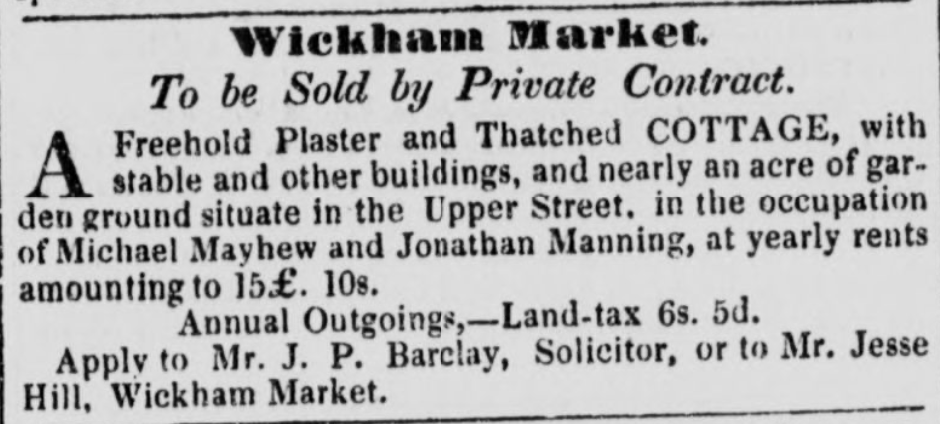
The stable and outbuildings would have suited Michael’s carrier business, offering space for horses and equipment. The garden also provide scope for growing produce and perhaps keeping poultry or other livestock.
The 1841 census places Michael and Elizabeth on Upper Street, both recorded as aged 65, with their son William, aged 20. Their daughter Charlotte and her husband, the blacksmith James Sheldrake, lived under the same roof, although they were recorded as a separate household.[xx]
The property appears to be the same one advertised for sale in 1839, when Michael Mayhew and Jonathan Manning were named as its occupiers. The 1840 Tithe Apportionment map supports this identification, showing the property with the blacksmith’s premises next door, consistent with the sequence of households in the 1841 census.
Later life
Sadly, Elizabeth died on 17 June 1844, aged 69. Her death certificate gives the cause of death as ‘Rheumatism’.[xxi] The term was used rather broadly in nineteenth-century medicine, so it is not possible to identify a more precise modern diagnosis from this description alone.
In the 1851 census, Michael was recorded as a widower aged 72, still working as a common carrier. He was then living on Bridge Street with his daughter Charlotte and her second husband, Samuel Rose, also a common carrier.[xxii] Samuel had been an agricultural labourer in Pettistree in 1841 but had entered the carrying trade by the time of his marriage to Charlotte in March 1848.[xxiii] His shared occupation and later home with Michael suggests that they may have worked together, though no connection between their businesses has been established.
In July 1851, John Kirbey, aged 50, was convicted of stealing Michael’s driving reins and pilot coat. He received three months’ imprisonment, with the first and last weeks in solitary confinement.[xxiv] The stolen belongings offer another glimpse of Michael’s work: reins were essential for controlling his horses, while a pilot coat would have protected him against the weather on his daily journeys.
Michael died on 23 March 1855, aged 78, after six weeks of illness. His death certificate records the cause as “Gangrena Senilis”, an archaic term for dry gangrene in older adults caused by reduced blood flow from hardened blood vessels. [xxv] The certified cause indicates that he had received professional medical care. His daughter Charlotte Rose was present when he died and registered his death five days later. [xxvi]
The carrying trade after Michael
Michael did not live to see the arrival of the railway, which reached Woodbridge and Wickham Market in 1859, four years after his death. The opening of the East Suffolk line on 1 June brought a new means of transport to the area, although the Wickham Market station was actually situated at Campsea Ashe, some distance from the village.
Today, Michael might be described as an entrepreneur, having established a successful business of his own. After his death, his son Isaac continued the carrying business, followed by Isaac’s son Samuel Mayhew, Michael’s grandson, after Isaac died in 1867.
By 1894, the business had passed from Samuel to James Grout. An article in the Woodbridge Reporter, “Wickham Market – Past and Present”, stated: ‘At the present time the business is carried on by Mr James Grout…’ The article also mentioned his assistant, known as ‘Cheerful Alfred’. Samuel, meanwhile, had moved to Pettistree, where the 1891 census shows him still working as a carrier in his own right. The article observed that carriers could still compete with the railways, particularly over shorter distances, although the number of independent carriers in Wickham Market had fallen from eight to just two.[xxvii]
As my fourth great-grandfather, Michael Mayhew has become much more than a name in my family tree. I began with a baptism in a Norfolk parish register and have gradually pieced together a life that took him from a childhood in a family recorded as paupers to establishing a successful carrying business in Suffolk. I doubt if I can ever know exactly what prompted him to leave Norfolk, what his life as a gamekeeper was like, or what he thought as the railway began to change the world in which he had worked. But I do know that he built something that his son and grandson were able to continue. That is quite an achievement, and I’m pleased to have been able to uncover a little of his story.
[i] Denton parish records Norfolk Record Office; Norwich, Norfolk, England; Norfolk Church of England Registers; Reference: PD 136/5 via ancestry.co.uk accessed 7 Nov 2026
[ii] Denton Archdeacon’s Transcripts 1725-1811 via findmypast.co.uk accessed 6 Nov 2026
[iii] Denton, Norfolk, Burials 1715-1812 via thegenealogist.co.uk accessed 7 Nov 2026
[iv] Denton, Norfolk, Burials 1813-1900 via thegenealogist.co.uk accessed 7 Nov 2026
[v] Denton. Poor Law Settlement Records 1755–1851 Image Group Number: 004397085 via familysearch.org accessed 6 Nov 2026
[vi] Tunstall parish records Suffolk Archives; Suffolk, England; Church of England Parish Registers; Reference: FC164/D1/5 via ancestry.co.uk accessed 7 Nov 2026
[vii] Tunstall parish records, Suffolk Archives; Suffolk, England; Church of England Parish Registers; Reference: FC173/D/1/4 via ancestry.co.uk accessed 7 Nov 2026
[viii] Tunstall parish records Suffolk Archives; Suffolk, England; Church of England Parish Registers; Reference: FC164/D1/6
[ix] Map of the county of Suffolk, from an actual survey made in the years 1823 & 1824 / by C. & J. Greenwood, etc. via National Library of Scotland accessed 4 Nov 2026
[x] The Field 27 Dec 1890 via findmypast.co.uk accessed 4 Nov 2026
[xi] Rendlesham parish records, Suffolk Archives; Suffolk, England; Church of England Parish Registers; Reference: FC173/D/1/5 accessed 7 Nov 2026
[xii] 1830 Pigot’s Director of Norfolk and Suffolk via thegenealogist.co.uk accessed 6 Nov 2026
[xiii] 1830 Pigot’s Directory of Suffolk via ancestry.co.uk accessed 4 Nov 2026
[xiv] 1830 Pigot’s Director of Norfolk and Suffolk via thegenealogist.co.uk accessed 6 Nov 2026
[xv] Suffolk Box Wagon MERL 56/188 via The Museum of English Rural Life accessed 5 Nov 2026
[xvi] Suffolk 1844 White’s Directory via thegenealogist.co.uk accessed 8 Oct 2026
[xvii] Ipswich Journal 5 Oct 1839 via findmypast.co.uk accessed 6 Nov 2026
[xviii] Wickham Market Tithe Apportionments 30 Apr 1840 via thegenealogist.co.uk accessed 6 Nov 2026
[xix] Ipswich Journal 5 Oct 1839 via findmypast.co.uk accessed 6 Nov 2026
[xx] 1841 England Census HO107/1041/16 via ancestry.co.uk
[xxi] Death Certificate for Elizabeth Mayhew
[xxii] 1851 England census HO1017/1802/238 via ancestry.co.uk accessed 7 Nov 2026
[xxiii] Wickham Market parish records Suffolk Archives; Suffolk, England; Church of England Parish Registers; Reference: FC103/D/2/3 accessed 7 Nov 2026
[xxiv] Suffolk Chronicle, 5 Jul 1851 via findmypast.co.uk accessed 12 Oct 2026
[xxv] Merriam Webster Medical Dictionary via Merriam-Webster.com accessed 7 Nov. 2026.
[xxvi] Michael Mayhew’s death certificate
[xxvii] Woodbridge Reporter, 3 May 1894 “Wickham Market – Past and Present, No.8 via findmypast.co.uk accessed 12 Oct 2026
