When I came into this world in 1958, I had a full set of parents, grandparents, and even a great-grandmother on my mother’s side. But, within less than a quarter of a century, by the time I celebrated my 24th birthday, I was the oldest surviving member of my family – apart from my paternal grandmother. Sadly, by then, she was living in a care home completely detached from reality, not even recognising her family, and visits left her unsettled for days.
Although I’d always been interested in social history and biographies, I never gave much thought to my own family’s past. Those who had gone before were simply ‘missing persons’, whose silhouettes faded a little more each year.
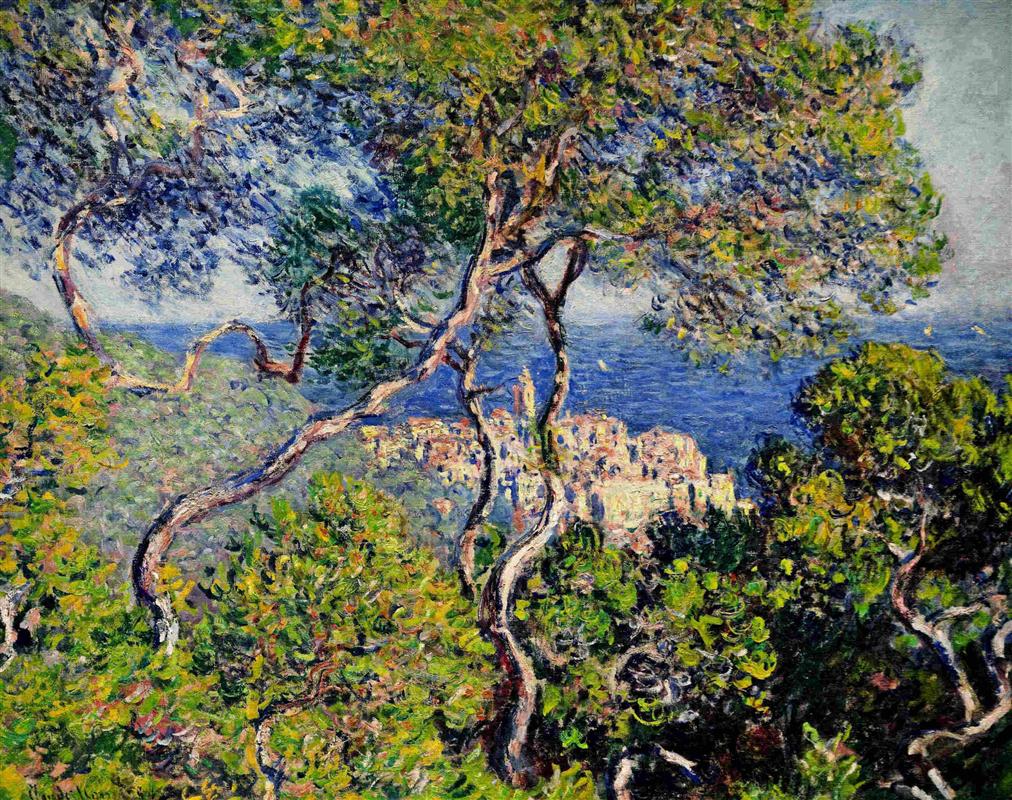
As my children grew up, I’d sometimes catch a resemblance, a nuance, or a mannerism that reminded me of someone long gone. Other times, a name, a place, or a half-remembered story would surface, leaving me wondering about our family connections. I knew, for instance, that my maternal grandmother had been born in Bordighera, Italy. It sounded like a wonderfully exotic place on the edge of the Mediterranean but had no real meaning to me. That changed when, quite by chance, I was travelling from Italy to France and passed through the town on a bus and felt an unexpected sense of recognition. Until then, my only reference to Bordighera had been a rather pretty framed Monet print which had caught my eye in a charity shop window back in the 1990s. Of course, I bought the picture, and it still hangs in my home today.
I was also vaguely aware that one grandfather had been a bricklayer and the other a Captain in the Royal Navy, that a great-aunt had been married for just days before her husband was killed in the First World War, and that there were family ties to the Channel Islands, Ireland, and the USA. All of this was scattered and disjointed – curious little fragments without context.
Then, about twenty years ago, I heard someone on the radio discussing military animal mascots, and a long-forgotten story from my maternal grandmother surfaced in my mind: a bear that had supposedly lived in a gun turret on HMS Ajax. Could it possibly be true? A quick search online revealed that it was. A bear cub named Trotsky had indeed served as the ship’s mascot, and there, on the National Maritime Museum’s website, was a photograph of him being transferred between vessels in 1921[ii].
That small discovery lit a spark. What other evidence might exist to qualify or expand upon the little I knew? But where to begin? Every guide to family history seemed to start with the same advice: “The first thing to do is talk to as many family members as you can…” That, of course, was out of the question. My parents were long gone. I knew my mother’s parents’ names, but beyond that, I had almost nothing to go on – not even the first names of my paternal grandparents, who had only ever been ‘Nanna’ and ‘Grandad’ to me.
Before I knew it, I was deep into the search. Surfing the ‘net was only just the beginning; soon, I was visiting archives, cemeteries, and other places I never imagined I’d find myself. A few ancestors were relatively well-documented, having been wealthy or successful in their time, but the vast majority had left almost no trace – just names and dates in public or parish records.
Gradually, though, I began to piece together some of their stories. Occasionally, I’d stumble upon personal details – attributes, habits, or quirks that seemed to echo down the generations. Finding a gravestone, a newspaper mention, a signature, or – on rare occasions – even a photograph, can give me a thrill that lasted for days. But there were also moments of quiet sadness – piecing together the story about a young mother lost in childbirth, a soldier killed in war, or someone who ended their days in a workhouse, entirely forgotten.
In her book Common People,[iii]Alison Light writes: “As we grow older, we see not how unique our lives have been, but how representative we were and are; that we are part of the figure in the carpet, woven by events, by chance and accident, and by the play of forces more powerful than us.”
Looking back, I realise that my family’s past was never truly lost – but was only waiting to be found. The people who came before me may have vanished from living memory, but they left their mark in unexpected ways: in stories half-remembered, in places once familiar to them, and even in the gestures and expressions of their descendants.
Each discovery has been a reminder that history isn’t just something that happened to other people – it belongs to all of us, shaping who we are in ways we may never fully understand.
[i] www.wikiart.org image in the Public Domain, last visited 22 Feb 2025
[ii] www.rmg.co.uk Although that image is no longer available to view online, other images of ‘Trotsky’ are held in a photograph album, catalogue reference ALB0257
[iii] Common People – The History of an English Family, Alison Light, published by Penguin Books, 2105
