Click here to go back to the previous chapter
Ellen was born in Shinfield, a rural Berkshire village with an economy based on agriculture, on 27 February 1851, the tenth of eleven children born to Joseph Kirby, an agricultural labourer, and Maria (née Bailey or Bayley) his wife. When Maria registered Ellen’s birth, she marked the register with a cross as she was unable to read or write. As education was not compulsory in England before 1870, many children received little or no formal education, instead starting work at a young age.
Life for an agricultural labourer in the 1850s would have been one of hard work and a struggle to provide for a large family, with little opportunity for social mobility or improvement in living conditions.
The Kirby family dwelt in one of a small group of cottages just outside the main village of Shinfield. Living in poverty and with so many mouths to feed, the household seems to have been somewhat chaotic. Ellen’s older brothers, John[i] and Charles[ii], were each imprisoned on separate occasions for violent crimes. Her sister Mary was allegedly assaulted by a cousin, although that case was dismissed, and later gave birth to an illegitimate daughter[iii]. Most of Ellen’s older sisters married labourers or farmers and remained in the local area.
However, Ellen stood out from her family. Benefitting from a combination of ambition and luck, she was able to follow a very different path from that of her parents and siblings.

Ellen was clearly intelligent, ambitious, presentable, and impeccable in her conduct. By the age of 20, she secured a position as a schoolroom maid at Westhorpe House, Little Marlow, Buckinghamshire[v], about twenty miles from Shinfield. Her employer, George Jackson, was a wealthy landowner whose wife had died in 1860 leaving him with eleven children. At the time of the 1871 census, Ellen was living in the house, which still included five of those children, three of whom were under sixteen. The household staff staying overnight on census night comprised six other servants: a footman, a cook, a needlewoman, two housemaids, and a kitchen maid.
Before taking up her position at Westhorpe House, Ellen likely worked as a housemaid in another property where she would have learned the essentials of managing a well-to-do household, which was probably a stark contrast to life in her parents’ cottage back in rural Shinfield.
To succeed as a schoolroom maid, Ellen would have needed to be well-mannered and display a calm personality, not given to impulsiveness or outbursts of temper. She was likely quietly yet well-spoken, thus avoiding any chance of the children picking up undesirable speech habits or even “the broad dialect of the labouring classes” that might be difficult to overcome as they grew older[vi]. Her duties included those essential for the smooth running of the schoolroom, such as keeping it clean and tidy, allowing the governess or tutor focus on teaching and the pupils on their lessons. Other duties might have involved getting the children up and dressed in the morning, taking them for walks outdoors in the afternoon, and then getting them ready for bed in the evening.
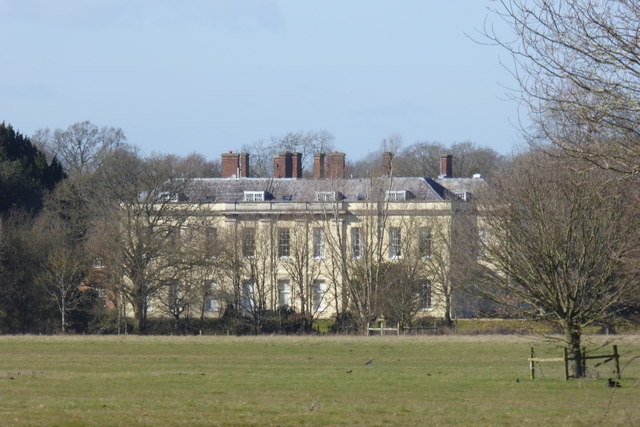
At some point during the next five or six years, Ellen took up a new position at Swallowfield Park, the home of Lieutenant-Colonel Sir Charles Russell, 3rd Baronet VC, a British Conservative politician and heavily decorated soldier and veteran of the Crimean War. Swallowfield Park, about three miles from Ellen’s birthplace of Shinfield, exists today as a Grade II listed building, but has been converted into self-contained apartments.
Sir Charles never married, so had no need for a schoolroom maid or lady’s maid. Ellen was therefore probably offered the position of housekeeper, one of the highest-ranking members of the domestic staff, typically reporting directly to the master of the house. The role of housekeeper was generally supervisory, managing the other female staff and ensuring they performed their duties efficiently and maintained the household’s high standards.
Sir Charles’ butler was a handsome and equally ambitious young man, Charles Reginald Collingwood, who was about four years younger than Ellen. Although Charles, was often away, accompanying his master on business to London and elsewhere, he and Ellen would have co-operated closely to ensure smooth household operations. They would have worked together on major events or functions, ensuring all aspects were covered.
The housekeeper’s role was multifaceted and required strong organisational, management, and interpersonal skills. She was the backbone of the household, making sure that everything ran smoothly and efficiently. In a home without a lady, her responsibilities were even more pronounced, as she often took on additional duties to fill the gap, ensuring the household maintained its standards and reputation. When the butler was away, which was frequently, the housekeeper would correspond with him regularly.
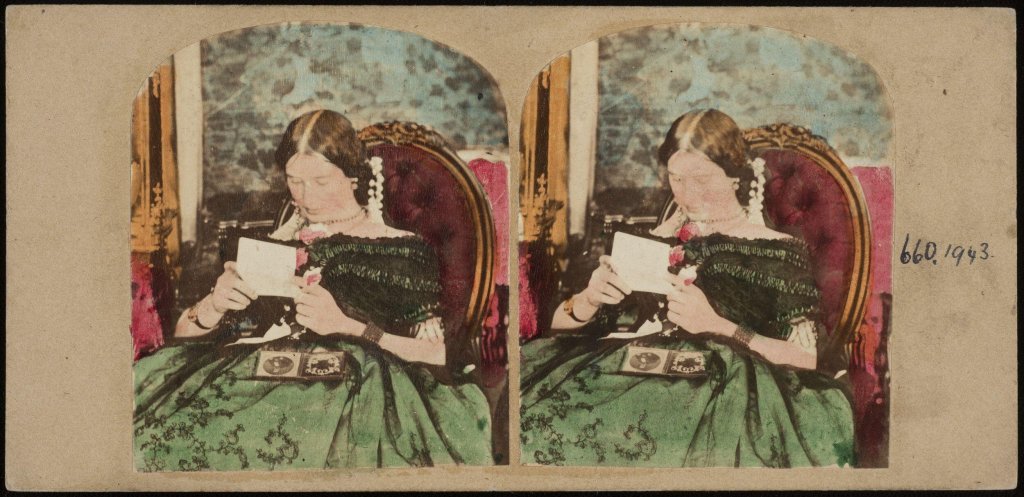
However, Miss Kirby as housekeeper and Mr Collingwood as butler also managed to find some time to socialise together. They enjoyed singing in a glee club, a musical group or choir that specialised in singing glees, a form of English part song popular in the 18th and early 19th centuries. Glees were typically unaccompanied vocal compositions for three or more voices, usually male, but sometimes female or mixed. They were characterised by harmonious and often intricate arrangements, designed to be performed by small ensembles. These clubs played a significant role in the cultural and social life of the time, providing musical training and performance opportunities in a communal setting.

In early 1877, a well-attended and successful glee concert took place at Swallowfield raising funds on behalf of the Royal Berkshire Hospital, and it was around this time that Charles and Ellen’s relationship seems to have become more than just professional.
On 9th June 1877 Ellen, who by now for some reason had given herself the middle name of ‘Alice’, and Charles took park in a clandestine marriage ceremony in London. Despite the secrecy, there were several inaccuracies on their marriage record which may suggest how keen they were to get married, but without drawing attention to it. You can read more about Charles’ early life and their marriage here.
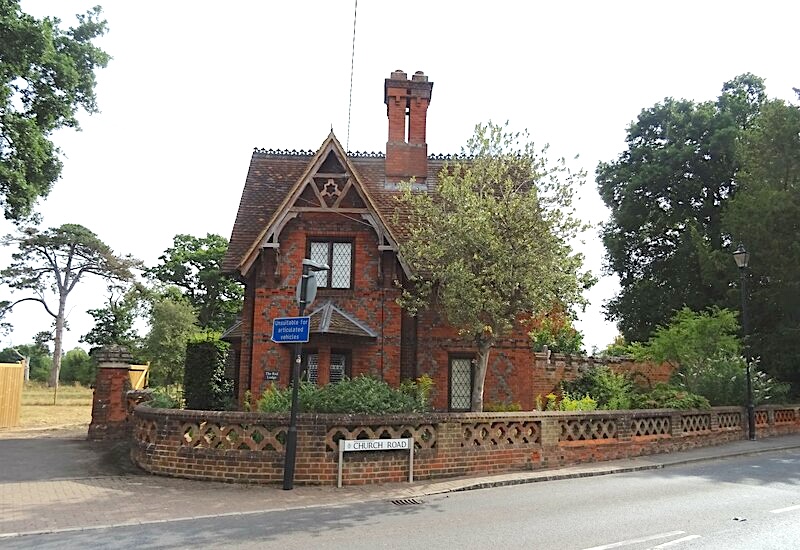
Since writing the story of Charles’s early life, I have discovered that he had rented a detached house with two parlours, a kitchen, scullery, larder, three bedrooms and a dressing room[x] situated at the bottom of the long driveway to Swallowfield Park. The lovely gothic red-brick building exists today as the Red Lodge, a Grade II listed building, and it was probably in this house that their eldest son Charles Ernest was born, just six months after their marriage.
Their second son, Harry Cuthbert, my great-grandfather, was born in Pimlico, London, in April 1879.
After the birth of their children, Ellen seems to have taken on the traditional role of homemaker, ensuring that their sons were well cared for, educated, and prepared for a fulfilling and prosperous future. According to the 1881 census, Ellen, described as ‘butler’s wife’ was living in the house by Swallowfield Park with their two toddler sons, three-year-old Charles Ernest, and one year-old Harry Cuthbert. An eighteen-year-old Swallowfield girl, Ruth Lane, was also listed with them as a general servant[xii]. Charles was away in Folkstone, Kent, where he served as butler to Sir Charles Russell who was visiting his brother George and his family[xiii].
The Collingwood family appear to have remained in Swallowfield until Sir Charles’ death in 1883. Soon after, Ellen and their two boys accompanied Charles to Scotland where he took up a new position at Glamis Castle, just north of Dundee, as the House Steward to Claude Bowes-Lyon, the 13th Earl of Strathmore and Kinghorne. This move must have been a significant and challenging step for Ellen, as she was moving from the county of her birth for the first time. Settling into a new life in Scotland, far from her family and friends, Ellen had to adapt to a new environment and community. However, despite these challenges, she managed to create a stable and nurturing home for her family
The 1891 census finds Ellen, once again described as a ‘butler’s wife’, and their two sons Charles Ernest, by now aged 13, and Harry Cuthbert, aged 12, living in Muir House on the Glamis estate[xiv]. Charles, however, was away once again at his employer’s London residence[xv].
Now that their boys were growing up and attending school in Dundee, Ellen became more involved in social activities, frequently travelling alongside her husband to the Earl’s villa in the town of Bordighera, on the Italian Riviera.

Ellen’s acceptance into society is evidenced by her and Charles being listed by name among the chief mourners at the funeral of the Hon. Herbert Bowes Lyon, fourth son of the Earl of Strathmore.
Before long, the arrival of Charles and Ellen in Cannes, on the French Riviera, for ‘the season’ was recorded among the proceedings of high society and the British aristocracy[xvii]. At the time, Cannes and nearby towns including Nice, Monte Carlo, and Bordighera, became part of the winter season for British and European aristocrats. Her inclusion in such elite circles confirms Ellen’s adaptation to a very different lifestyle to that of her early life as one of eleven children of an agricultural labourer.
Around the turn of the century, Charles and Ellen invested their savings in a general store in the popular resort of Bordighera, which was ably managed by their younger son Harry[xviii]. This was a large premises, selling everything from groceries to real estate, and became very successful – but that’s for another story.
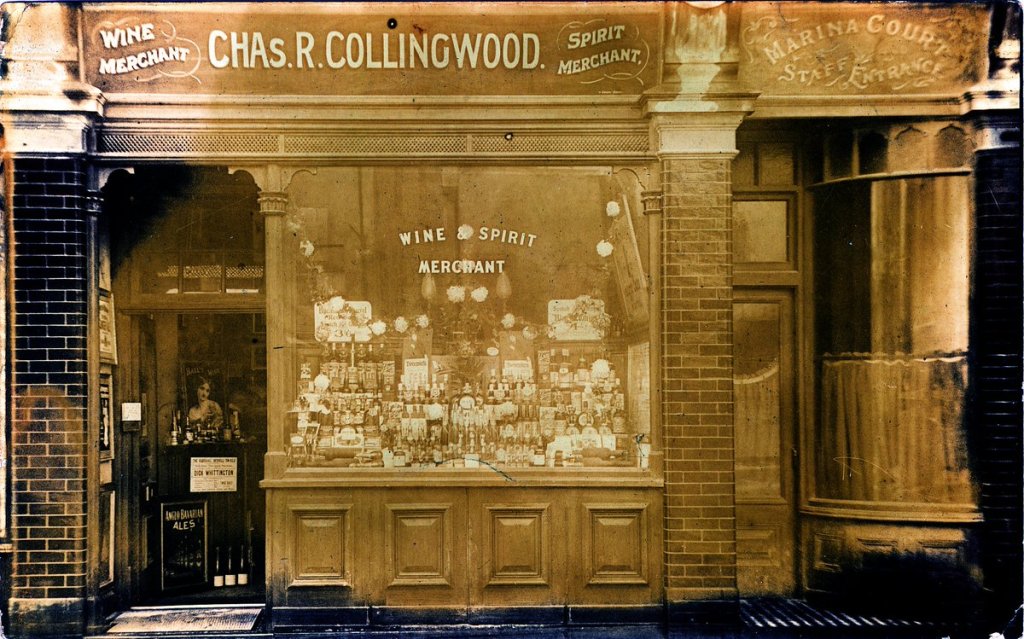
Sadly, the 13th Earl of Strathmore died at his villa in Bordighera in February 1904, leaving Charles without employment. Charles and Ellen therefore returned to England where they opened a successful wine and spirits merchant business in the fashionable resort of Bexhill-on-Sea in East Sussex.
Five years later, they went back to Scotland, where they took over the management of the exclusive Scottish Conservative Club on Princes Street in Edinburgh. Charles and Ellen appear on the 1911 Scotland census[xx] as House Steward and Housekeeper respectively.
The First World War began in 1914, but it did not seem to have a direct impact on Charles and Ellen initially. However, both of their sons joined the Motor Transport section of the Army Service Corps. The elder son, Charles Ernest, enlisted in December 1913 at almost 36 years old. Harry, who was now married with children, was conscripted in 1917. Although neither son served on the front line, it must have been a worrying time for their parents.
In 1916, Charles and Ellen returned once again to Berkshire and ventured into hotel keeping, leveraging their extensive skills and experience as a couple. Charles partnered with two others to purchase the Ship Hotel on Duke Street, Reading[xxi], where he took on the role of resident manager with Ellen providing strong support.
Their extensive experience managing domestic staff and maintaining high standards of service in prestigious households made the transition into high-class hotel keeping a natural fit for Charles and Ellen. Their roles as butler and housekeeper had honed their skills in hospitality, organisation, and customer service, ensuring seamless operations and a luxurious environment for guests. This background provided them with the expertise needed to oversee hotel staff, attend to the needs of affluent guests, and maintain the high standards expected in elite establishments, making them well-suited to excel in the hospitality industry.
During their time in Edinburgh, Ellen may have developed an interest in politics as she went to great lengths to ensure her name was added to the Electoral Roll following the passage of the Representation of the People Act in 1918. This Act granted women aged 30 or over the right to vote, subject to certain occupancy qualifications based on their own or their husband’s account. To be included on the Roll, Ellen had to submit written evidence of occupancy for at least six months to the Town Clerk. Both Ellen and her husband are listed in the Autumn 1919 Electoral Roll as residents of The Ship Hotel, Duke Street, Reading[xxii].
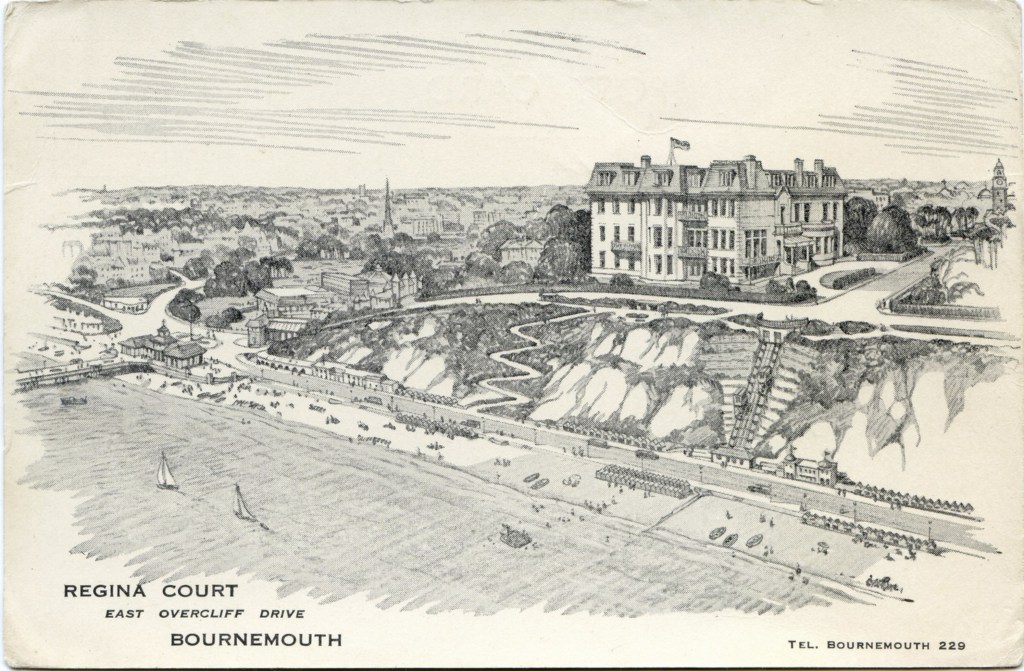
In March 1920, the Ship Hotel was sold, and Charles was able to purchase the Regina Court Hotel, a 48-bedroom hotel in Bournemouth[xxiii] on the south coast of England. Charles and Ellen are listed on the 1921 register at the Regina Court as Proprietor and Manageress, with nine live-in staff: a bookkeeper, two chambermaids, two waitresses, a housemaid, two porters, and a kitchen maid. They once again made a success of the venture and sold the hotel for a significant profit towards the end of the year[xxiv].
Their next project was to purchase a couple of properties in Cowes on the Isle of Wight, which they transformed into the Regina Hotel. Situated in a picturesque location along the seashore, the hotel boasted a prime position close to the Royal Yacht Squadron and within 200 yards of the golf course[xxv]. Charles and Ellen worked tirelessly to ensure the hotel’s success, and it quickly became a popular destination for wealthy visitors, especially during the bustling excitement of Cowes Week when sailors and spectators descended upon the Isle of Wight from around the world.

Ellen’s professionalism and dedication were evident in every aspect of the couple’s ventures during their forty-seven years of marriage. However, Ellen, by now in her seventies, became unwell with gastric flu complicated by heart failure and sadly died on 9 December 1924 leaving Charles to carry on alone.
Charles’ story to be continued soon……
[i] Berkshire Chronicle 23 Jan 1858 via www.findmypast.co.uk
[ii] Reading Mercury 27 Aug 1864 via www.findmypast.co.uk
[iii] Reading Mercury 31 Jul 1869 via www.findmypast.co.uk
[iv] Stereograph by Samuel Poulton entitled ‘The Little Politician’ © Victoria and Albert Museum, London via collections.vam.ac.uk last accessed 04 Jun 2024
[v] England Census 1871 Class: RG10; Piece: 1404; Folio: 159; Page: 22; GSU roll: 828509 via www.ancestry.co.uk
[vi] The Duties of Servants: a practical guide to the routine of domestic service published 1890: via archive.org last accessed 4 Jun 2024
[vii] © Copyright Shazz and licensed for reuse under this Creative Commons Licence.
[viii] Stereograph by Samuel Poulton of a young woman reading a letter © Victoria and Albert Museum, London via collections.vam.ac.uk last accessed 04 Jun 2024
[ix] Berkshire Chronicle 17 Feb 1877 via www.findmypast.co.uk
[x] Berkshire Chronicle 28 Dec 1878 via www.findmypast.co.uk
[xi] © Copyright JThomas and licensed for reuse under Creative Commons Licence via www.geograph.org.uk last accessed 8 Jun 2024
[xii] 1881 England census, Class: RG11; Piece: 1311; Folio: 43; Page: 4; Line: ; GSU roll: 1341318 via www.ancestry.co.uk
[xiii] 1881 England census, Class: RG11; Piece: 1010; Folio: 136; Page: 17; Line: ; GSU roll: 1341240 via www.ancestry.co.uk
[xiv] 1891 Scotland census, ED 4, Household schedule number 1, Line 3, Roll CSSCT1891_100 via www.ancestry.co.uk
[xv] 1891 England census, Registration district: Kensington, Sub registration district: Brompton, ED, Institution or Vessel: 26, Piece: 34 Folio: 93 via www.ancestry.co.uk
[xvi] Forfar Herald 30 Apr 1897 via www findmypast.co.uk
[xvii] The Queen 4 Jan 1902 via www findmypast.co.uk
[xviii] Harry Cuthbert Collingwood: Report on Cadet, Jan 1918 held in the National Archives
[xix] Courtesy of the Bexhill Museum
[xx] 1911 Scotland census 685/2 62/2 National Records of Scotland – with special thanks to Bob Hirst for providing that elusive record!!
[xxi] Reading Standard 10 Jan 1925 www findmypast.co.uk
[xxii] Berkshire Electoral Registers: Reading, Autumn 1919 via www.ancestry.co.uk
[xxiii] 1921 England census RG15/05486/0438 via www findmypast.co.uk
[xxiv] Portsmouth Evening News 8 Apr 1929 via www findmypast.co.uk
[xxv] Ibid
[xxvi] Portsmouth Evening News 13 Dec 1924 via www findmypast.co.uk
